
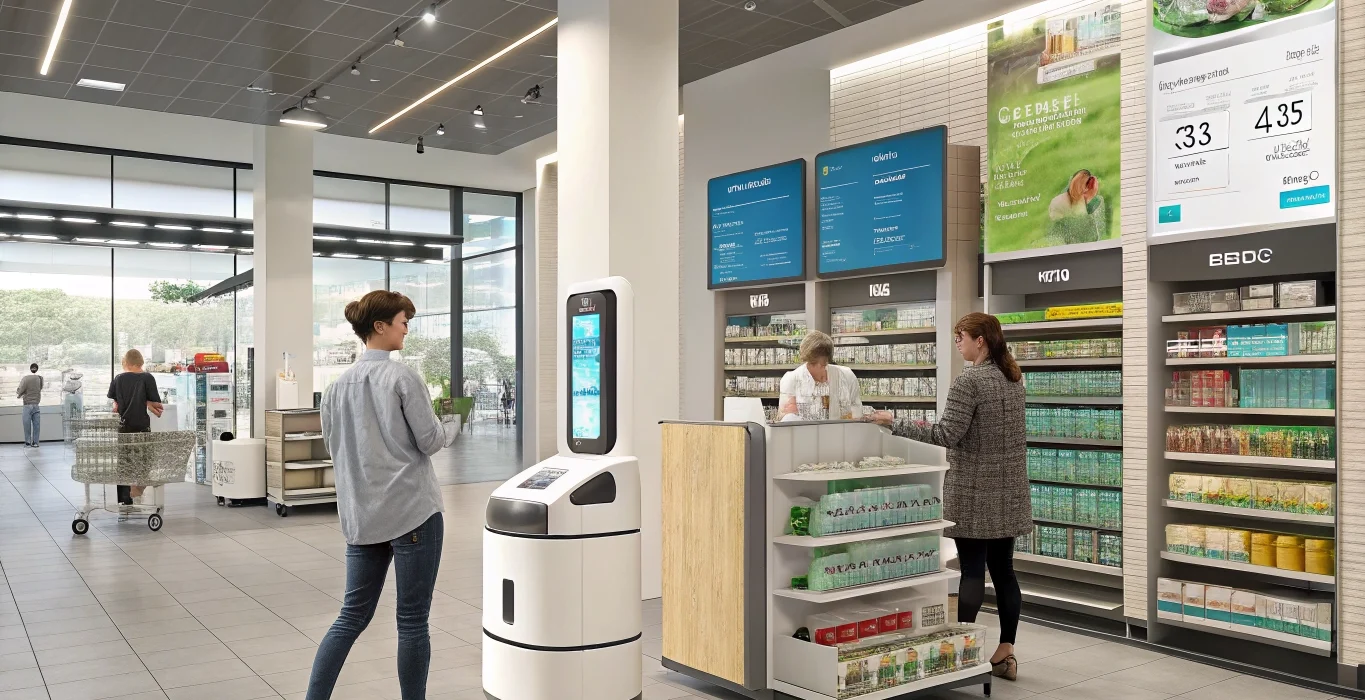
The UAE’s retail sector is embracing a new wave of digital transformation as businesses increasingly deploy artificial intelligence (AI) agents to automate operations, improve decision-making and respond faster to changing consumer demand.
As retailers expand across physical stores, e-commerce platforms, distribution centres and regional supply chains, the challenge has shifted from gathering data to converting it into real-time business decisions. Agentic AI is emerging as a solution by moving beyond data analysis to autonomously recommending or executing actions within predefined business rules.
According to Sulaiman Yusuf, Regional Vice President for the Middle East and Africa at UiPath, AI’s next stage of evolution lies in becoming an integral part of daily business operations rather than functioning as a standalone analytical tool.
He said businesses have spent years digitising processes, yet many critical decisions still rely on employees manually collecting information from multiple systems. Agentic AI addresses this by understanding business context, assessing various factors and recommending or carrying out actions under established governance policies.
Many retailers continue to face challenges from fragmented technology environments, where enterprise resource planning (ERP) systems, warehouse management platforms, merchandising tools and e-commerce applications operate independently. These disconnected systems create data silos that delay operational decisions in an increasingly competitive market.
Yusuf noted that successful AI adoption depends less on acquiring more data and more on connecting existing systems. He explained that most retailers already possess vast amounts of information, but the key is enabling AI agents to access and interpret data across the organisation rather than within isolated applications.
By integrating multiple business systems, AI agents can simultaneously evaluate inventory levels, sales trends, customer demand, supplier information and market conditions before recommending the most effective course of action. In organisations with appropriate governance frameworks, some of these decisions can also be executed automatically.
The technology is becoming increasingly valuable as retailers expand across multiple sales channels, where customers expect consistent pricing, stock visibility and fulfilment whether shopping online, through marketplaces or in physical stores.
Dynamic pricing is expected to be one of the most significant applications of agentic AI. Large retailers managing thousands of stock-keeping units (SKUs) face growing complexity as demand patterns, seasonal trends and competitive pricing change rapidly.
Yusuf said no pricing team can realistically monitor every SKU daily, while AI agents can continuously analyse price elasticity, competitor activity, historical demand and inventory levels to recommend pricing strategies that balance profitability with competitiveness.
Unlike traditional pricing software based on fixed rules, agentic AI can weigh multiple business objectives simultaneously, including margins, inventory turnover, promotional performance and customer demand, before determining the most appropriate pricing response. Depending on company policies, recommendations can either be reviewed by merchandising teams or automatically implemented within approved thresholds.
The same capabilities also extend to promotions and markdown strategies. AI agents can monitor sales performance, inventory availability and market conditions in real time, allowing retailers to adjust promotional campaigns dynamically instead of relying on fixed schedules, helping protect margins while responding more effectively to changing consumer behaviour.
World Tech News
No Comment! Be the first one.